

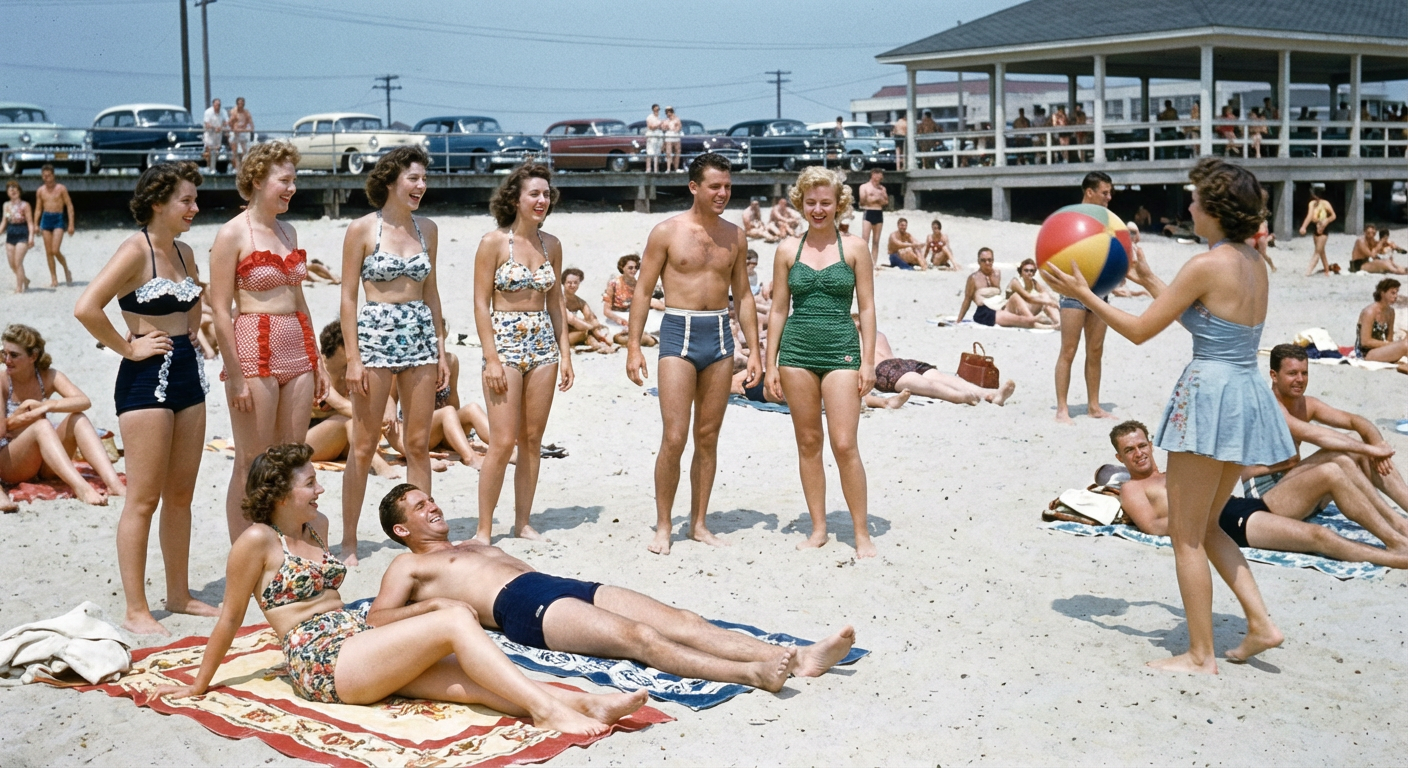
The 1950s represent a pivotal era in the evolution of swimwear, characterized by a unique fusion of Hollywood glamour, post-war optimism, and revolutionary textile engineering. Moving away from the utilitarian constraints of the 1940s, swimsuits in the 1950s became sophisticated garments designed not just for swimming, but for sculpting the female form into the idealized “hourglass” silhouette. This decade defined the beach as a stage for fashion, where structure, modesty, and playful prints merged to create some of the most enduring styles in fashion history.
The Architecture of the Hourglass
In the 1950s, a swimsuit was less like a modern athletic garment and more like a piece of high-end foundation wear. Influenced by Christian Dior’s “New Look,” swimwear focused heavily on creating a cinched waist and a structured bust.
Manufacturers utilized internal boning, underwires, and heavy-duty elastic panels to ensure that the wearer maintained a controlled shape even while wet. These suits were often referred to as “miracle suits” because they promised to slim the hips and lift the chest. The “sheath” style became the gold standard, featuring a straight-cut bottom that offered full coverage while the bodice provided the dramatic structure typical of the era’s evening gowns.
Fabrics and Innovations: The Rise of Lastex
The aesthetic of 1950s swimwear was made possible by significant advancements in fabric technology. Before this era, wool and heavy cotton were common, which often became saggy and uncomfortable when drenched. The introduction of Lastex—a yarn made from latex rubber wrapped in cotton, silk, or rayon—changed everything.
Lastex allowed for “stretch and recovery,” meaning the suit would hold its shape regardless of activity. Designers also experimented with novelty fabrics like velvet, corduroy, and even sequins, though these were often intended for “poolside lounging” rather than serious ocean swimming. The tactile nature of these fabrics added a layer of luxury to the beach experience, elevating swimwear from sportswear to couture.
The Iconic Silhouettes
While the one-piece sheath was dominant, several variations defined the decade:
- The Princess Cut: This style featured vertical seams running from the bust to the hem, creating a lengthening effect that was highly flattering for various body types.
- The Bubble Suit: Popularized toward the end of the decade, the bubble suit featured a gathered, voluminous hem that puffed out at the thighs, offering a playful, youthful alternative to the more serious sheath.
- The Skirted Swimsuit: Modesty was still a significant consideration. Many suits featured a “modesty panel” or a small attached skirt that covered the upper thighs, providing a feminine, dress-like appearance.
The Bold Emergence of the Bikini
Though the bikini was officially introduced by Louis Réard in 1946, it remained a scandalous and relatively rare sight on mainstream American beaches during the early 1950s. However, as the decade progressed, the two-piece swimsuit began to gain traction.
Unlike the skimpy bikinis of today, the 1950s version featured high-waisted bottoms that covered the navel and substantial, bra-like tops. It wasn’t until Hollywood starlets like Brigitte Bardot and Ava Gardner were photographed in them that the public began to embrace the two-piece. Even then, the 1950s bikini remained focused on the “pin-up” aesthetic—celebrating curves while maintaining a level of structural decorum.
Patterns, Prints, and Tropical Influences
The 1950s were a vibrant decade for textile design. Following the somber tones of the war years, consumers craved color and whimsy.
- Polka Dots and Gingham: These classic patterns were staples of the mid-century wardrobe, offering a “girl next door” charm.
- Tropical and Hawaiian Prints: As Hawaii moved toward statehood, “Tiki culture” exploded. Swimsuits were frequently adorned with hibiscus flowers, palm leaves, and exotic motifs.
- Animal Prints: Influenced by the “jungle” films of the era, leopard and cheetah prints made their way onto the beach, catering to a more provocative and adventurous consumer.
The Role of Accessories
In the 1950s, a trip to the beach was an ensemble event. A swimsuit was rarely worn alone; it was the centerpiece of a coordinated look.
Matching swim caps were essential, often decorated with intricate rubber flowers or geometric patterns to protect expensive salon hairstyles. Terry cloth “cabana sets”—matching shorts or wraps worn over the suit—allowed for a seamless transition from the water to the boardwalk. Cat-eye sunglasses and straw hats completed the look, ensuring that the 1950s woman was perfectly coiffed from head to toe.
Cultural Impact and Celebrity Influence
The 1950s swimsuit was inextricably linked to the burgeoning celebrity culture. The “Pin-up” girl became a cultural icon, with stars like Marilyn Monroe and Esther Williams (the “Million Dollar Mermaid”) setting the standard for beach beauty.
Esther Williams, in particular, had a profound impact. Her musical films featuring synchronized swimming showcased the durability and glamour of modern swimwear, eventually leading her to launch her own successful line of swimsuits. These designs focused on the “real woman’s” body, emphasizing that glamour was achievable for everyone, not just movie stars.
Legacy in Modern Fashion
The influence of 1950s swimsuits is still felt today. The “retro” or “vintage-inspired” swimsuit remains a perennial favorite in contemporary fashion. Many women still turn to the high-waisted bottoms and structured tops of the 50s for their flattering fit and timeless elegance.
Modern brands frequently replicate the sweetheart necklines, halter straps, and tummy-control panels that were perfected seventy years ago. The 1950s taught the fashion world that swimwear could be a powerful tool for self-expression and body confidence, proving that true style never truly goes out of fashion.
Conclusion
The 1950s swimsuit was more than just a garment; it was a symbol of a transforming society. It represented the intersection of technological progress, the liberation of the female silhouette, and the height of mid-century glamour. Whether it was the classic black sheath or a vibrant tropical two-piece, the swimwear of this era remains a testament to the art of construction and the enduring appeal of the hourglass form. Today, as we look back on these iconic designs, we see a decade that mastered the balance between modesty and allure, creating a legacy that continues to make waves on beaches around the world.
