

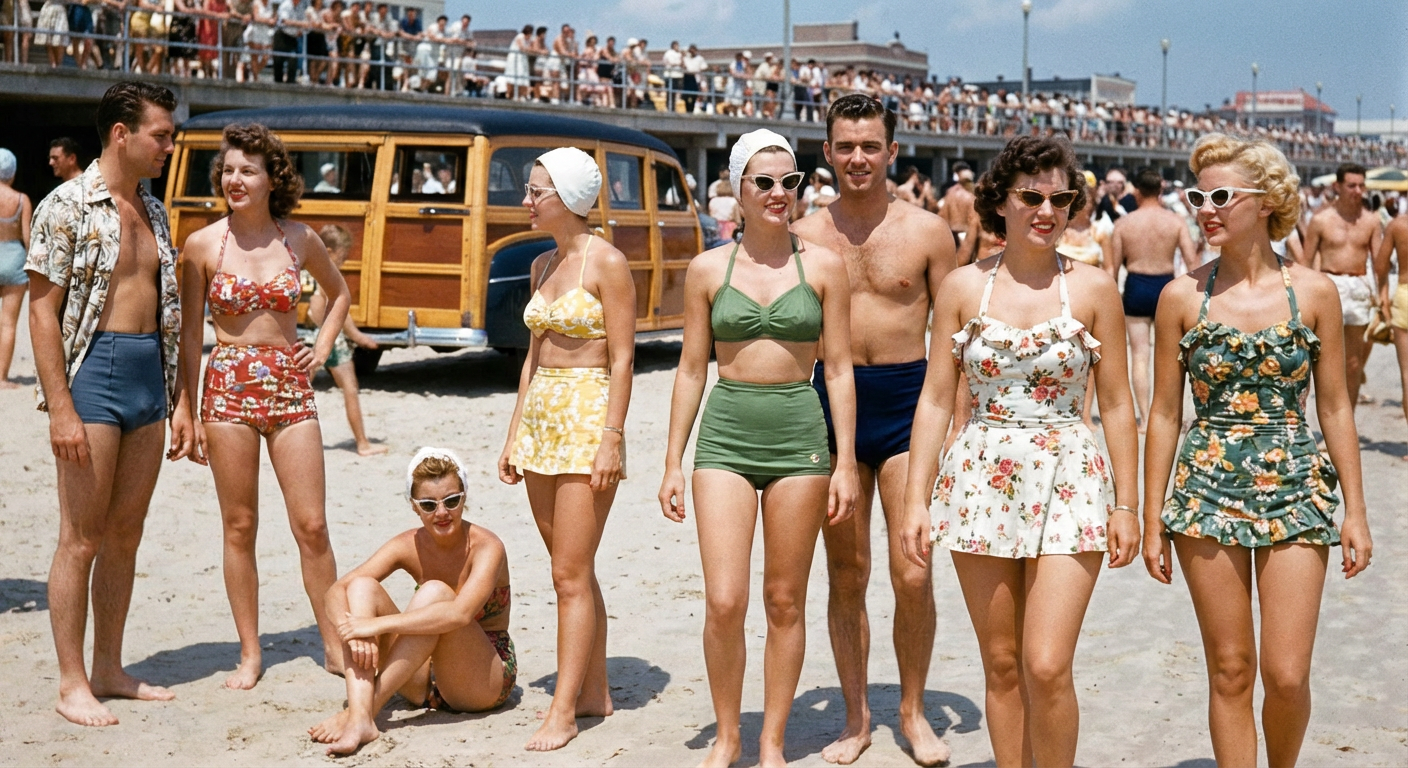
The 1950s represent a transformative era in fashion history, a decade where the austerity of the post-war years gave way to a celebration of femininity, luxury, and the “New Look.” Nowhere was this shift more evident than in the evolution of swimwear. Moving away from the functional, often saggy wool knits of previous decades, 50s swimwear embraced structure, sophisticated textiles, and an unapologetic focus on the hourglass silhouette. To understand the 1950s swimsuit is to understand a cultural obsession with the idealized female form, cinematic glamour, and the burgeoning leisure class.
The Architecture of the Hourglass
The defining characteristic of 1950s swimwear was its internal structure. Unlike the flimsy Lycra blends of today, 50s suits were engineered garments. Influenced by Christian Dior’s “New Look,” swimwear designers aimed to cinch the waist, lift the bust, and smooth the hips.
Most suits of this era featured “foundation garment” technology. This included built-in bras with underwires or heavy padding—often referred to as “bullet bras”—to create a sharp, conical silhouette. Side boning and elasticized panels made of Lastex (a yarn made from latex) provided tummy control, essentially turning the swimsuit into a piece of waterproof shapewear. This allowed women to maintain a polished, statuesque appearance even while lounging by the pool or wading into the surf.
The Iconic Maillot and Sheath Styles
The one-piece “Maillot” remained the most popular choice for the average woman in the 1950s. However, within this category, styles varied significantly. The “Sheath” swimsuit was perhaps the most iconic, characterized by a straight-cut bottom that resembled a very short dress or a long tunic.
These suits often featured “modesty panels”—small skirts or flaps of fabric across the front—to ensure the wearer remained “respectable” while moving. Necklines were equally diverse, ranging from the modest square neck to the alluring sweetheart and the sporty halter top. Halter necks were particularly favored because they allowed for an adjustable fit that emphasized the shoulders while providing the necessary lift for the bust.
The Rise of the Two-Piece and the Scandalous Bikini
While the one-piece reigned supreme, the 1950s saw the rise of the two-piece suit. It is a common misconception that the bikini dominated the 50s; in reality, the “classic” two-piece of the era was quite modest by modern standards. These suits featured high-waisted bottoms that covered the navel and structured tops that mirrored the design of one-piece suits.
[Picture: A high-waisted two-piece swimsuit in a polka-dot pattern, showing a modest gap between the top and the bottom.]
The “true” bikini, invented by Louis Réard in 1946, remained a fringe fashion for much of the early 50s. It was considered scandalous and was even banned on many Mediterranean and American beaches. It wasn’t until the mid-to-late 50s, with films like And God Created Woman featuring starlets like Brigitte Bardot, that the bikini began to seep into the mainstream. Even then, the 50s bikini maintained a level of structural integrity and coverage that differentiated it from the string bikinis of later decades.
Fabrics, Patterns, and Whimsical Details
The 1950s saw a revolution in textile technology. While cotton remained popular for its breathability and ability to hold vibrant prints, the introduction of synthetic fibers like Nylon and Lastex changed everything. These materials allowed suits to dry faster and hold their shape when wet, a major improvement over the heavy knits of the 1940s.
In terms of aesthetics, the 50s were a decade of playfulness. Popular patterns included:
- Polka Dots and Stripes: Classic, nautical-themed designs that never went out of style.
- Novelty Prints: Tropical motifs, exotic birds, and Hawaiian florals reflected the era’s fascination with “Tiki” culture and Pacific travel.
- Texture: Ruched fabric (shirring) was incredibly popular, not just for its visual appeal but for its ability to hide figure imperfections and provide stretch.
The Influence of Hollywood and Pin-Up Culture
It is impossible to discuss 50s swimwear without mentioning the influence of Hollywood. The “Golden Age” of cinema turned actresses into style icons, and their onscreen appearances in swimwear set global trends. Esther Williams, the “Million Dollar Mermaid,” popularized the athletic yet glamorous one-piece, proving that a woman could be both a serious swimmer and a beauty queen.
Simultaneously, the “Pin-Up” movement, led by figures like Marilyn Monroe and Betty Grable, emphasized a more provocative, curvaceous look. The pin-up aesthetic—characterized by the “wiggling” walk and the “pouty” pose—was intrinsically linked to the structured, body-shaping swimwear of the time. These images were not just advertisements for suits; they were advertisements for a lifestyle of leisure, sunshine, and idealized femininity.
Accessories: Completing the Beach Ensemble
In the 1950s, a trip to the beach was a curated fashion event. A swimsuit was rarely worn alone; it was part of a complete “cabana set.” This often included:
- Swim Caps: Often highly decorative, featuring rubber flower petals or geometric textures.
- Beach Cover-ups: Matching wrap skirts, short-sleeved button-down shirts, or terry-cloth robes.
- Cat-Eye Sunglasses: The definitive eyewear of the decade, adding a touch of feline mystery.
- Wedged Espadrilles: To maintain height and posture even on the sand.
The Legacy of 50s Swimwear
Today, the influence of 1950s swimwear is more prevalent than ever. The “retro” aesthetic has seen a massive resurgence in contemporary fashion. Modern brands frequently look to the 50s for inspiration, reviving high-waisted bottoms, ruched side panels, and balconette tops.
The enduring appeal of 50s swimwear lies in its ability to celebrate the female form through thoughtful construction. Unlike modern minimalist trends that often demand a “perfect” body to look good, 50s styles were designed to create a silhouette. They offered a sense of poise and confidence that remains timeless. Whether it is the modest elegance of a floral maillot or the playful charm of a high-waisted polka-dot two-piece, 1950s swimwear remains the gold standard for beachside glamour.
In conclusion, the 1950s were a decade that bridged the gap between the conservative past and the liberated future. It took the technical innovations of the industrial age and applied them to the art of fashion, resulting in swimwear that was as much a feat of engineering as it was a statement of style. For the modern enthusiast, the 50s swimsuit is more than just a vintage garment; it is a symbol of an era that believed every woman deserved to look like a movie star under the sun.
