

How to Store Onions Properly: Simple Tips to Keep Them Fresh Longer
Onions are one of those kitchen staples you almost always have on hand. Whether you are cooking a hearty curry, tossing together a salad, or preparing a quick stir fry, onions are usually part of the plan. But here is the thing: storing onions the wrong way can lead to spoilage, unpleasant odors, and wasted food. If you have ever reached for an onion only to find it soft, moldy, or sprouting, you already know the frustration.
So, how do you store onions properly? It is simpler than you might think, but there are a few key rules you need to follow. Let us walk through everything you need to know so your onions stay fresh, crisp, and ready to use whenever you need them.
Why Proper Onion Storage Matters
You might wonder, do onions really need special storage? The answer is yes. Onions are sensitive to moisture, light, and airflow. When exposed to the wrong conditions, they can spoil quickly or lose their flavor.
Improper storage can lead to:
- Mold growth
- Sprouting
- Soft or mushy texture
- Strong, unpleasant smells
When you store onions correctly, you not only extend their shelf life but also maintain their taste and nutritional value. That means less waste and better meals.
The Ideal Conditions for Storing Onions
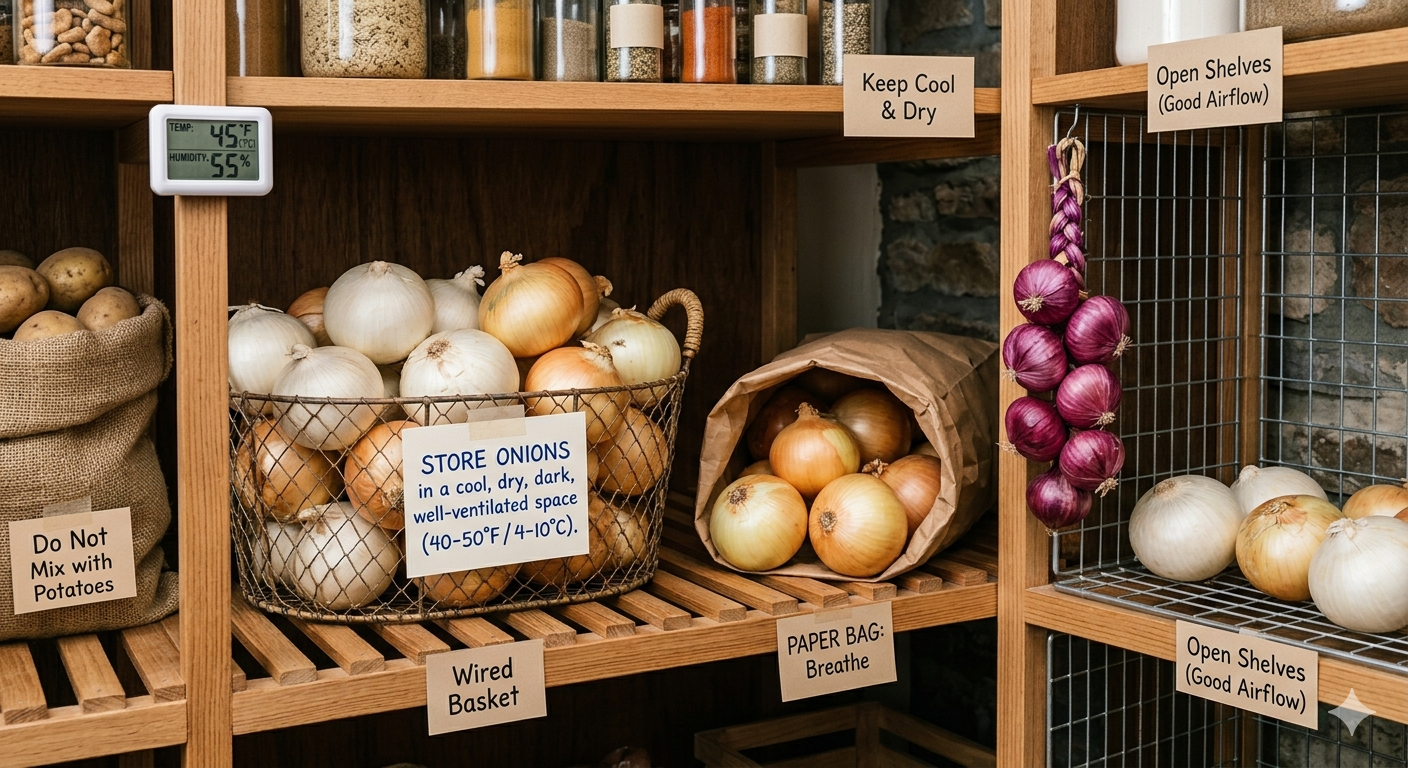
To keep onions fresh, you need to mimic the environment they prefer. Think cool, dry, and well-ventilated. These three factors are the foundation of proper onion storage.
Onions thrive in temperatures between 7 to 13 degrees Celsius. Too much heat speeds up spoilage, while too much moisture encourages mold. Good airflow is also essential because it prevents trapped humidity.
A dark space is another important factor. Exposure to light can cause onions to sprout, which affects both their texture and taste. That is why onions are often stored in pantries, cellars, or cupboards rather than on countertops.
Best Places to Store Whole Onions
Finding the right spot in your home can make a big difference. You do not need fancy equipment, just a suitable environment.
A pantry is usually the best choice. It is dark, cool, and away from direct sunlight. If you do not have a pantry, a kitchen cabinet that stays relatively cool can work as well.
Some people use mesh bags or baskets to store onions. This is actually a great idea because it allows air to circulate freely. You can also hang onions in net bags to save space and improve ventilation.
Avoid storing onions in plastic bags. Plastic traps moisture, which can lead to rot. Instead, go for breathable materials like paper bags, mesh, or even old stockings if you want to get creative.
Can You Store Onions in the Refrigerator?
This is one of the most common questions people ask. The short answer is no, at least not for whole onions.
Refrigerators are humid environments, and moisture is the enemy of fresh onions. Storing whole onions in the fridge can make them soft and moldy much faster.
However, there is an exception. Once you cut an onion, refrigeration becomes necessary. Cut onions should be stored in an airtight container and placed in the fridge. This prevents them from drying out and stops their strong odor from spreading to other foods.
How to Store Cut Onions
Cut onions require a different approach compared to whole ones. Once the protective outer layer is removed, onions become more vulnerable to bacteria and moisture.
To store cut onions properly:
- Place them in an airtight container or wrap them tightly in plastic wrap
- Keep them in the refrigerator
- Use them within 7 to 10 days
If you notice a slimy texture or an off smell, it is best to discard the onion. Freshness is key when it comes to food safety.
Storing Different Types of Onions
Not all onions are the same, and their storage needs can vary slightly. Understanding the differences can help you get the most out of each type.
Yellow onions are the most common and have the longest shelf life. They can last for several weeks when stored properly.
Red onions are slightly more delicate but can still last a good amount of time under the right conditions.
White onions tend to have a shorter shelf life due to their higher moisture content, so it is best to use them sooner.
Sweet onions, like Vidalia, have even more moisture and sugar. This makes them more prone to spoilage, so they should be used quickly or stored in the fridge if necessary.
Keep Onions Away from Potatoes
This might surprise you, but storing onions and potatoes together is not a good idea. While they are often used together in cooking, they do not get along well in storage.
Potatoes release moisture and gases that can cause onions to spoil faster. Onions, in turn, can affect the flavor and shelf life of potatoes.
Keeping them separate helps both vegetables last longer. Think of it as giving each one its own personal space.
Signs Your Onions Have Gone Bad
Even with the best storage practices, onions will not last forever. Knowing when they have gone bad can save you from unpleasant surprises.
Look out for:
- Soft or mushy spots
- Visible mold
- Strong, sour smell
- Excessive sprouting
If an onion feels firm and dry with no signs of damage, it is still good to use. When in doubt, trust your senses. If something seems off, it is better to throw it away.
Can You Freeze Onions?
Yes, you can freeze onions, and it is a great way to extend their shelf life. However, freezing changes their texture, so they are best used in cooked dishes rather than raw preparations.
To freeze onions:
- Peel and chop them into desired sizes
- Place them in a freezer safe bag or container
- Store them for up to 6 months
Frozen onions are perfect for soups, stews, and stir fries. They save time and reduce waste, especially if you have extra onions you cannot use right away.
Simple Tips to Maximize Freshness
Keeping onions fresh does not require complicated steps. A few simple habits can go a long way.
Store them in a cool, dry, and dark place with good airflow. Avoid plastic bags and keep them away from moisture. Separate them from potatoes and refrigerate only when they are cut.
Check your onions regularly and remove any that show signs of spoilage. This prevents one खराब onion from affecting the others.
By following these tips, you can enjoy fresh onions for weeks without any hassle.
Conclusion
Storing onions properly is one of those small kitchen habits that can make a big difference. It helps you save money, reduce waste, and always have fresh ingredients ready for your meals. The key is to provide the right environment cool, dry, dark, and well ventilated.
Once you understand these basics, everything else becomes easy. Whether you are storing whole onions, cut ones, or even freezing them, a little care goes a long way. Next time you bring home a bag of onions, you will know exactly what to do.
FAQs
1. How long do onions last when stored properly?
Whole onions can last several weeks to a few months depending on the type and storage conditions.
2. Can I store onions in a plastic bag?
It is not recommended because plastic traps moisture, which can lead to spoilage.
3. Why do onions sprout?
Sprouting happens due to exposure to light and moisture. Proper storage can prevent this.
4. Is it safe to eat sprouted onions?
Yes, but the flavor may be affected. It is best to remove the sprout before using.
5. Can I store peeled onions at room temperature?
No, peeled onions should be refrigerated in an airtight container to maintain freshness.
