

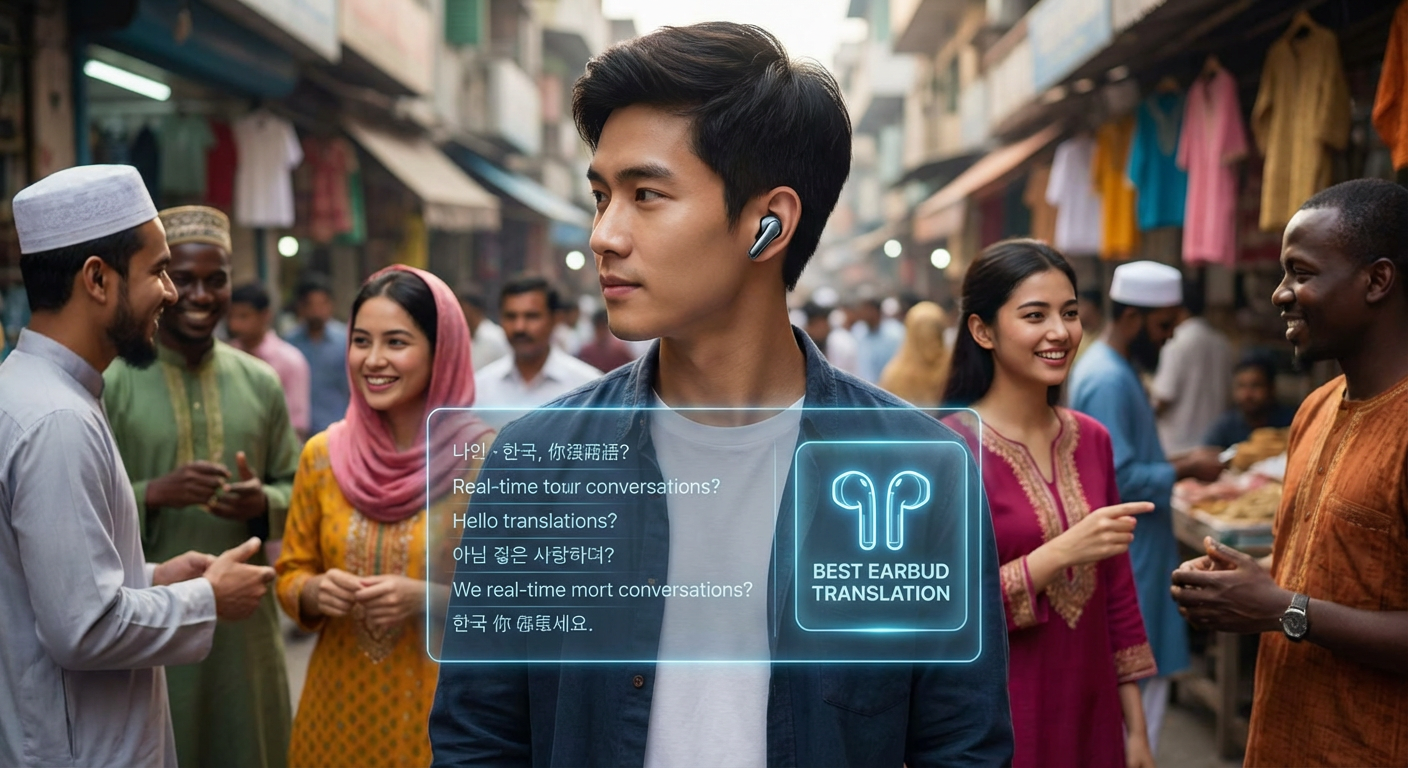
The dream of universal communication, once a staple of science fiction like The Hitchhiker’s Guide to the Galaxy, has officially transitioned into a tangible reality. In our increasingly globalised society, the “best earbud translation” technology is no longer just a gimmick for tech enthusiasts; it is a vital tool for international business, solo travel, and multicultural connectivity. These sophisticated wearables leverage artificial intelligence (AI), neural machine translation (NMT), and high-speed cloud processing to bridge the gap between thousands of languages in near real-time.
The Evolution of Linguistic Wearables
For decades, language translation was a cumbersome process involving heavy dictionaries or handheld electronic devices that required manual input. The shift to earbuds represents a monumental leap in user experience. By integrating high-fidelity microphones and sophisticated noise-cancellation algorithms, modern translation earbuds can isolate a speaker’s voice even in crowded airports or bustling marketplaces.
![A person wearing sleek, white translation earbuds while talking to a street vendor in a foreign country.]
The core of this technology lies in the synergy between hardware and software. Most top-tier translation earbuds function by connecting to a smartphone application via Bluetooth. When someone speaks, the earbud captures the audio, sends it to a cloud-based translation engine (utilising giants like Google Translate, Microsoft Translator, or proprietary AI), and streams the translated audio back into the listener’s ear. This process, which used to take several seconds, now happens in milliseconds.
Key Features of the Best Earbud Translation Devices
When searching for the perfect pair of translation earbuds, several critical factors distinguish a professional-grade device from a basic consumer gadget.
1. Latency and Speed
The primary hurdle in real-time translation is latency. The “best earbud translation” experience is one where the delay is so minimal that it doesn’t interrupt the natural flow of conversation. Current industry leaders have managed to reduce this lag to under 0.5 seconds, depending on the stability of the internet connection.
2. Offline Capabilities
While cloud-based translation offers the highest accuracy, travellers often find themselves in dead zones or areas with expensive data roaming. High-end models now offer offline language packs. While these packs may have a slightly more limited vocabulary than their online counterparts, they provide a crucial safety net for basic navigation and emergency communication.
3. Accuracy and Nuance
Language is more than just words; it is about context, slang, and cultural nuance. The best devices utilise Neural Machine Translation, which looks at entire sentences rather than word-for-word substitutions. This ensures that a joke in Spanish doesn’t turn into a nonsensical phrase in English.
Leading Models in the Current Market
Several brands have emerged as frontrunners in the race for linguistic dominance. Each offers a unique approach to the “natural conversation” problem.
The Timekettle Series: Timekettle has revolutionized the space with their “WT2” and “M3” series. Their standout feature is “Simultaneous Mode,” which allows two people to each wear one earbud. Both parties can speak continuously without pausing, and the AI translates the dialogue in real-time. This creates a hands-free, fluid experience that mimics a natural face-to-face interaction.
Google Pixel Buds: While not dedicated translation devices, the integration of Google Assistant makes these a powerhouse for quick translations. By using “Conversation Mode,” users can interact with over 40 languages. The strength here lies in Google’s massive linguistic database, which is arguably the most comprehensive in the world.
Vasco Translator Earbuds: Known for their robust hardware, Vasco focuses on simplicity and reliability. Their devices often come with built-in SIM cards that provide free, lifetime data for translations in many countries, solving the connectivity issue that plagues other models.
Practical Applications: Beyond Just Travel
While the “best earbud translation” keywords are often associated with tourism, the practical applications extend far deeper into professional and social spheres.
Healthcare and Emergency Services: In medical settings, time is of the essence. When a doctor and patient do not share a common language, translation earbuds can facilitate the exchange of critical symptoms and histories while a human interpreter is being summoned.
Business Negotiations: Global trade relies on clear communication. Having a pair of translation earbuds allows executives to catch the “vibe” and immediate meaning of a conversation during a dinner meeting or a site visit, where a formal interpreter might feel too intrusive.
Education: In diverse classrooms, these earbuds can help international students follow lectures in real-time, ensuring they don’t fall behind while they are still mastering the local language.
Challenges and Future Horizons
Despite the incredible progress, the technology is not without its hurdles. One of the main challenges is “noise pollution.” In extremely loud environments, the microphones may struggle to distinguish the primary speaker from background chatter. Furthermore, tonal languages like Mandarin or Vietnamese require incredibly high-precision audio capture to ensure the correct meaning is conveyed.
The future of earbud translation looks toward “voice cloning” and emotional intelligence. Imagine an earbud that not only translates the words but does so in the speaker’s actual voice and tone. This would preserve the personality and emotional weight of the conversation, making the technology feel less like a computer and more like a bridge.
How to Choose the Right Pair for You
To find your best earbud translation match, consider your specific needs:
- For the Frequent Flyer: Look for models with long battery life (at least 6-8 hours of continuous use) and a portable charging case.
- For the Professional: Prioritise devices with superior noise cancellation and “dual-mode” settings for meetings.
- For the Budget-Conscious: Consider earbuds that function primarily as high-quality music headphones but have a strong translation app integration.
Conclusion
The quest for the best earbud translation technology has transformed the way we perceive borders and cultural barriers. These tiny devices are proof that technology, at its best, serves to bring people closer together. Whether you are navigating the winding alleys of Tokyo, closing a deal in Berlin, or simply making a new friend in a local cafe, translation earbuds ensure that you are never truly lost for words. As AI continues to evolve, the “tower of Babel” is effectively being dismantled, one earbud at a time, paving the way for a world where everyone can understand and be understood.
