

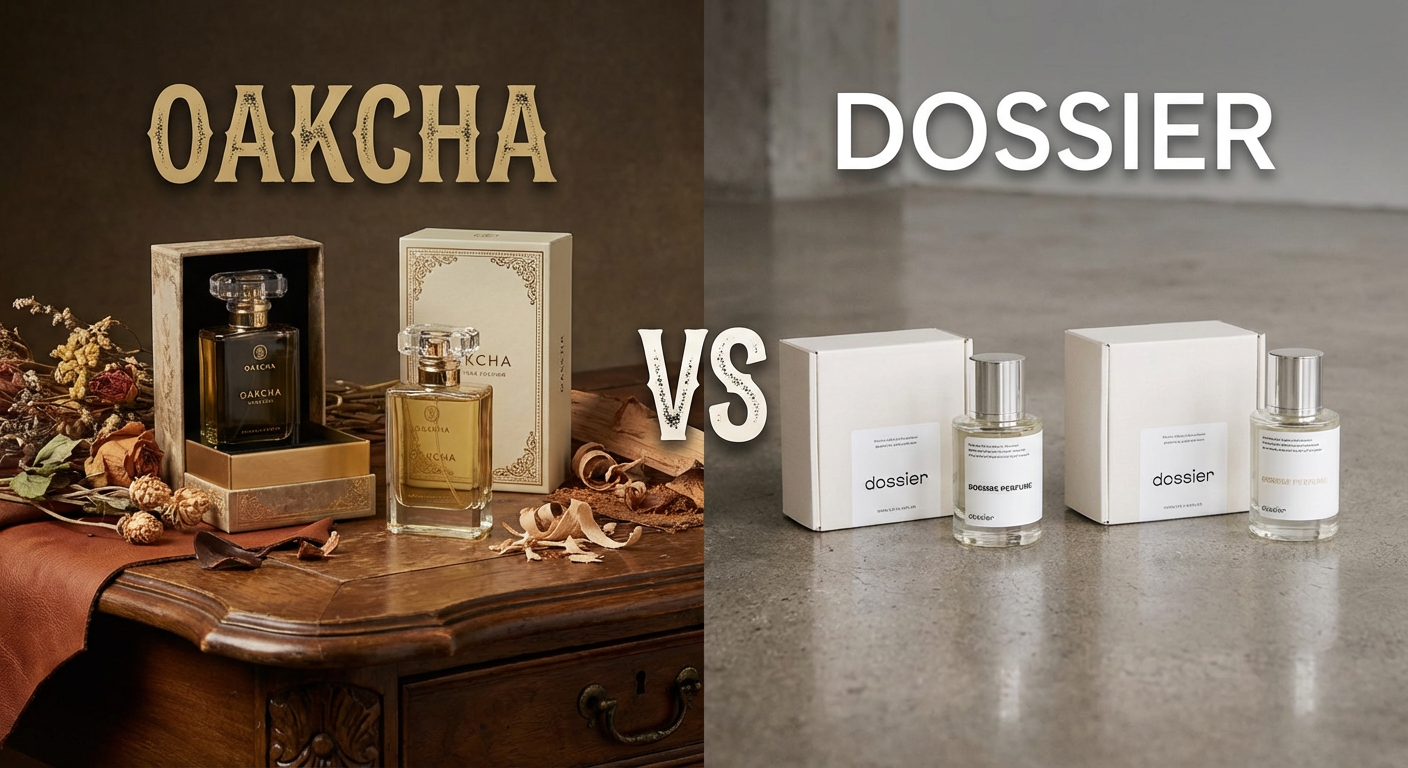
In the rapidly evolving world of luxury perfumery, a new sector has taken the industry by storm: the “inspired-by” or “dupe” fragrance market. For decades, the allure of scents like Baccarat Rouge 540, Creed Aventus, or Tom Ford’s Lost Cherry was gatekept by astronomical price tags. Today, two brands stand at the forefront of democratization: Oakcha and Dossier. While both aim to replicate high-end olfactory experiences for a fraction of the cost, they cater to different sensibilities, concentrations, and aesthetic preferences. This analysis dives deep into the nuances of Oakcha vs. Dossier to help you decide which house deserves a spot on your vanity.
The Philosophy of the Clone: How They Differ
At first glance, Oakcha and Dossier seem to offer the same service—affordable alternatives to designer scents. However, their brand philosophies are distinct.
Dossier, based in New York, prides itself on transparency and simplicity. Their mission is “fair pricing for all,” which they achieve through minimalist packaging and a rejection of traditional marketing markups. Their aesthetic is clean, uniform, and functional.
Oakcha, on the other hand, positions itself as a “luxury” dupe house. They focus heavily on the presentation and the potency of the product. While Dossier feels like a smart lifestyle choice, Oakcha feels like a deliberate indulgence. They emphasize the richness of their formulations, often aiming for a more “opulent” vibe than the utilitarian approach of Dossier.
![Infographic comparing Dossier’s minimalist bottle design vs Oakcha’s heavy glass gilded aesthetic]
Fragrance Concentration: Extrait de Parfum vs. Eau de Parfum
The most significant technical difference between the two brands lies in the oil concentration. In the world of perfumery, the ratio of fragrance oil to alcohol determines the scent’s “Extrait” or “Eau” status, which directly impacts longevity and sillage.
Oakcha exclusively produces Extrait de Parfum. This is the highest concentration available in the industry, typically containing between 30% and 40% fragrance oil. This results in a dense scent that lingers on the skin for 8–12 hours, and often evolves more slowly throughout the day.
Dossier primarily focuses on Eau de Parfum (EDP), which usually sits between 15% and 20% oil concentration. While EDPs are the industry standard for most designer brands, they generally offer less longevity than an Extrait. Dossier’s scents are lighter and more “breathable,” making them excellent for office wear or daily errands where a heavy scent trail might be overwhelming.
Scent Accuracy and Olfactory Profiles
When purchasing a dupe, the “accuracy” to the original inspiration is the ultimate metric of success.
Dossier is renowned for its clinical accuracy. Their “Woody Sandalwood” (inspired by Le Labo’s Santal 33) and “Ambery Saffron” (inspired by Baccarat Rouge 540) are frequently cited by enthusiasts as being 95% to 99% identical to the originals. They manage to capture the top notes—the first impression—exceptionally well.
Oakcha’s accuracy is equally high, but because of the Extrait concentration, their scents often feel “thicker.” For example, Oakcha’s “Sweven” (their BR540 alternative) has a deeper, more resinous quality than Dossier’s version. Some users find that Oakcha’s scents take about 15–20 minutes to “settle” before they truly mirror the original, whereas Dossier provides instant gratification.
Packaging and Aesthetic Appeal
For many fragrance collectors, the bottle is just as important as the liquid inside.
Dossier uses a “no-frills” approach. Every bottle is identical: a clear, cylindrical glass bottle with a white label and a magnetic cap (a premium touch for a budget brand). This uniformity looks organized on a shelf but lacks a sense of individual identity for each scent.
Oakcha opts for a more high-end presentation. Their bottles are heavy, opaque, and rectangular, often color-coded by collection (e.g., the Oud collection or the Signature collection). They use gold-toned caps and artistic labels that feel more akin to niche perfumery houses. If you are looking for a gift or a bottle that looks “expensive,” Oakcha wins the aesthetic battle.
Price Point and Value Proposition
Value is subjective, but the numbers tell a clear story.
Dossier is generally the more affordable option. Most of their 50ml bottles range from $29 to $49. They also offer a very generous return policy, allowing customers to test a scent and return it if it doesn’t meet their expectations. This lowers the “blind buy” risk significantly.
Oakcha is slightly more expensive, typically ranging from $40 to $60 for a 30ml or 50ml bottle. However, because they are Extraits, you often need fewer sprays to achieve the desired effect. A single bottle of Oakcha may last longer in terms of usage time than a bottle of Dossier because the potency is higher.
![Side-by-side price comparison chart showing Dossier’s $29 starting point vs Oakcha’s $39 starting point]
Longevity and Projection: The Wear Test
In head-to-head wear tests, Oakcha almost always outperforms Dossier in terms of longevity. If you apply Oakcha in the morning, you will likely still smell it on your skin by dinner time. It clings to fabric for days.
Dossier has respectable projection—meaning people will smell you when you walk into a room—but the scent tends to fade after 4–6 hours. For those who enjoy switching their fragrance from a “day” scent to a “night” scent, Dossier’s shorter lifespan is actually an advantage. For those who want a “set it and forget it” fragrance, Oakcha is the superior choice.
Ingredient Transparency and Ethics
Both brands have made strides in ethical manufacturing. Dossier is very vocal about being vegan, cruelty-free, and using clean ingredients. They provide a breakdown of the notes and the origins of their inspiration on every product page.
Oakcha is also cruelty-free and vegan. They emphasize that their perfumes are paraben and phthalate-free. Both brands manufacture in facilities that adhere to strict safety standards, ensuring that you aren’t sacrificing health for a lower price tag.
The Verdict: Which Should You Choose?
The choice between Oakcha and Dossier ultimately depends on your personal priorities as a consumer.
Choose Dossier if:
- You are on a strict budget and want the lowest price possible.
- You prefer a minimalist, uniform aesthetic.
- You like lighter scents that aren’t overly cloying.
- You value a risk-free return policy for easy testing.
Choose Oakcha if:
- Longevity is your number one priority.
- You prefer “beast mode” fragrances with high oil concentrations.
- You want bottles that look luxurious and decorative on your dresser.
- You are looking for a specific “niche” dupe that Dossier may not carry yet.
Final Thoughts
The “Oakcha vs. Dossier” debate doesn’t have a single winner because they serve different niches within the dupe market. Dossier is the perfect entry point for someone looking to build a functional fragrance wardrobe on a budget. Oakcha is the destination for the fragrance enthusiast who wants the performance of a $300 perfume without the $300 price tag. Whichever you choose, the days of overpaying for a designer label are officially over. Your signature scent is now more accessible than ever.
