

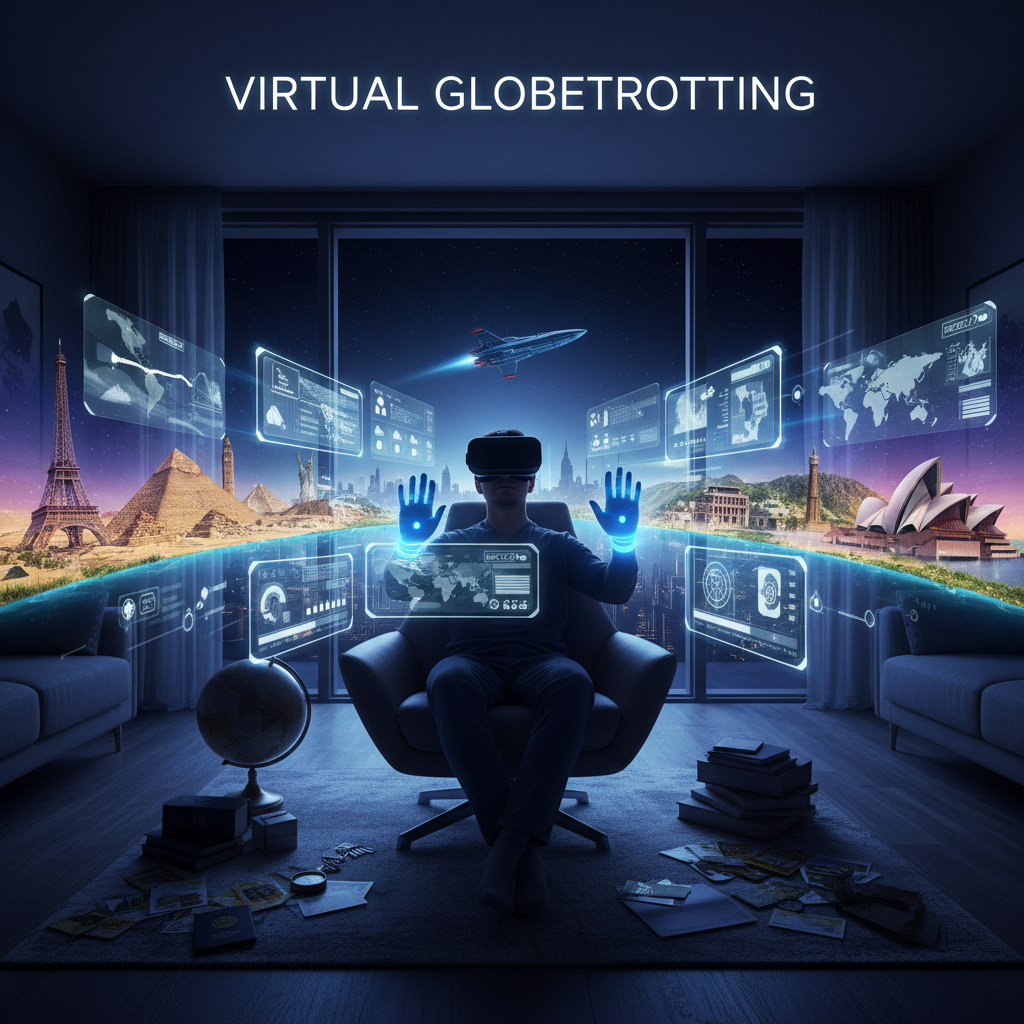
The concept of travel has undergone a radical transformation in the digital age. While the allure of physical passage—the smell of a Parisian bakery, the humid air of a tropical rainforest, or the tactile grit of ancient ruins—remains irreplaceable, a new phenomenon has emerged: virtual globetrotting. This practice allows individuals to traverse the planet using nothing more than an internet connection and a screen. It is more than just a substitute for physical travel; it is a sophisticated method of cultural education, accessibility, and global connection that democratizes the experience of discovery.
The Evolution of the Digital Traveler
Virtual globetrotting began as a novelty. In the early days of the internet, low-resolution photographs and static webcams provided grainy windows into distant cities. Today, the landscape is unrecognizable. High-definition 360-degree video, Augmented Reality (AR), and Virtual Reality (VR) have turned passive observation into immersive participation. We are no longer just looking at pictures of the world; we are stepping into digital recreations of it.
The rise of this medium was accelerated by global shifts that restricted physical movement, but its staying power lies in its convenience. Virtual globetrotting removes the barriers of cost, visa restrictions, and physical mobility. It allows a student in a rural village to walk through the halls of the Louvre, or an elderly explorer to revisit the peaks of the Swiss Alps from the comfort of an armchair.
Tools of the Trade: How to Travel Digitally
To embark on a virtual journey, one must know where to look. The ecosystem of virtual globetrotting is vast, ranging from government-sponsored tourism portals to grassroots livestreaming platforms.
1. Google Earth and Street View
Perhaps the most fundamental tool for the virtual globetrotter is Google Earth. With its “Voyager” feature, users can take guided tours of the world’s most significant ecological and historical sites. Street View has expanded far beyond city roads, capturing the hiking trails of Machu Picchu, the base camps of Mount Everest, and even the underwater beauty of the Great Barrier Reef.
2. Virtual Museum Tours
The world’s premier cultural institutions have opened their digital doors. The British Museum, the Vatican Museums, and the Smithsonian National Museum of Natural History offer high-resolution, interactive galleries. These platforms often provide more detail than an in-person visit might allow, such as the ability to zoom in on the brushstrokes of a Van Gogh or read ancient inscriptions that are usually behind protective glass.
3. Live EarthCams
For those who crave the spontaneity of real-time existence, live webcams offer a “live” look at the world. Whether it is watching the Shibuya Crossing in Tokyo during rush hour or observing a watering hole in the Namibian desert, these feeds provide a sense of synchronicity with the rest of the planet.
The Educational and Social Impact
Virtual globetrotting is a powerful pedagogical tool. In classrooms, it transports students to the locations they are studying, turning abstract history into a tangible reality. Seeing the scale of the Great Wall of China or the intricate architecture of the Taj Mahal fosters a deeper sense of global citizenship and empathy.
Socially, this medium has birthed communities of “digital nomads” and explorers. Platforms like Twitch and YouTube are filled with “IRL” (In Real Life) streamers who walk through the streets of Seoul or Berlin, interacting with a global audience in real-time. This creates a shared experience where the viewer is not just watching a documentary but participating in a live journey, asking questions, and influencing the path the streamer takes.
Environmental and Ethical Considerations
One of the most compelling arguments for virtual globetrotting is its environmental footprint. Traditional international travel is a significant contributor to carbon emissions. Virtual exploration offers a sustainable alternative for those looking to reduce their impact on the planet while still satisfying their curiosity about the world.
Furthermore, virtual globetrotting can protect “over-toured” locations. Sites like Venice or the Galapagos Islands suffer from the physical toll of millions of visitors. By shifting some of this interest to digital platforms, we can preserve the physical integrity of these wonders for future generations while still allowing the public to appreciate their beauty.
The Future: Haptics and the Metaverse
The future of virtual globetrotting lies in “sensory expansion.” Current technology focuses primarily on sight and sound. However, the development of haptic suits and olfactory devices suggests that we may soon be able to “feel” the texture of a stone wall in Rome or “smell” the spice markets of Marrakech.
As the Metaverse evolves, virtual travel will become more social. Instead of exploring alone, you might meet a friend’s avatar at a digital recreation of a jazz club in New Orleans. These persistent virtual worlds will allow for a level of immersion that blurs the line between the physical and the digital, making the world feel smaller and more interconnected than ever before.
Conclusion
Virtual globetrotting is not a replacement for the physical act of wandering, but it is a magnificent supplement. It serves as a pre-trip planning tool, a post-trip memory bank, and a standalone adventure for those who cannot travel. It challenges our definition of “being there” and proves that the human spirit of exploration is not confined by geography.
As we continue to refine the tools of digital exploration, the world becomes more accessible to everyone. We are entering an era where the wonders of the world are truly universal, available to anyone with the curiosity to click and explore. Whether you are seeking inspiration, education, or a brief escape from the mundane, the world is waiting for you—just a few keystrokes away.
