

The discovery of a single mouse scuttling across the kitchen floor or the faint sound of scratching behind a drywall can trigger immediate anxiety for any homeowner. Mice are more than just a nuisance; they are prolific breeders and vectors for diseases such as Hantavirus, Salmonellosis, and Leptospirosis. Furthermore, their instinctive need to gnaw can lead to structural damage and fire hazards if they chew through electrical wiring. Achieving a mouse-free home requires a multi-faceted approach that combines immediate elimination with long-term exclusion strategies.
Understanding the Enemy: Why Mice Enter Your Home
Before deploying traps, it is essential to understand why mice have chosen your property. Mice seek three necessities: food, water, and warmth. During the transition from autumn to winter, the drop in temperature drives these rodents indoors. They can squeeze through openings as small as a dime, making almost any structure vulnerable. Identifying the signs of an infestation—such as droppings (small, dark, and pointed), gnaw marks on food packaging, and oily rub marks along baseboards—is the first step in reclaiming your space.
Step 1: Sanitation and Food Management
The most effective way to discourage mice is to remove their food source. If a mouse cannot find a reliable meal, it is unlikely to stay.
- Airtight Containers: Transfer cereals, grains, pet food, and baking supplies from cardboard boxes or plastic bags into glass or heavy-duty plastic containers with locking lids.
- Deep Cleaning: Mice can survive on crumbs hidden under the toaster or behind the refrigerator. Sweep and mop floors daily, and wipe down counters with disinfectant.
- Proper Waste Disposal: Ensure your indoor and outdoor trash cans have tight-fitting lids. Avoid leaving pet food bowls out overnight, as the scent of kibble is highly attractive to rodents.
Step 2: Exclusion – Sealing the Entry Points
Elimination is futile if new mice can simply walk through the front door. Exclusion is the process of physically “building out” rodents.
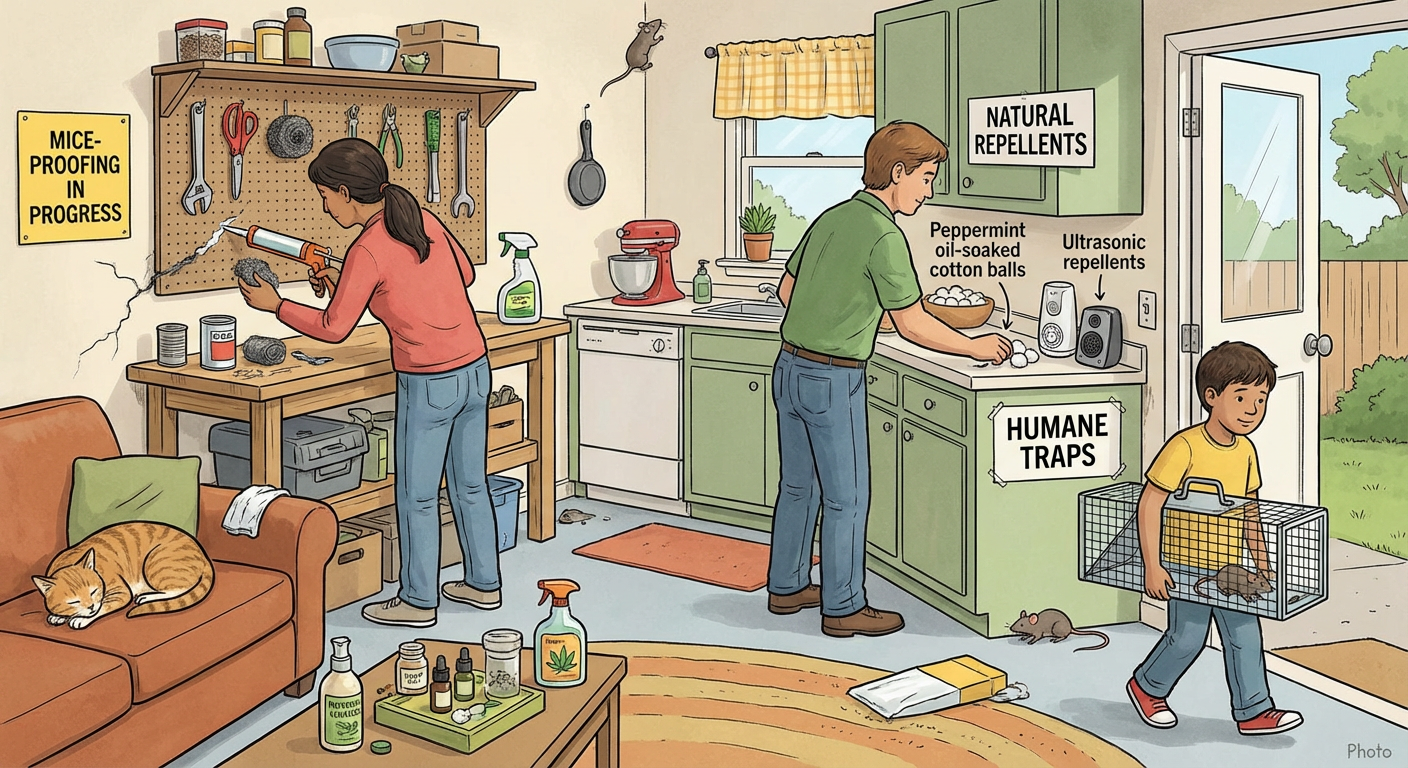
Inspect the exterior of your home for any cracks or gaps. Focus on areas where utility pipes enter the siding, gaps under doors, and vents. Unlike wood or plastic, steel wool is a material mice cannot chew through. Stuff steel wool into small holes and secure it with caulking or expanding foam. For larger gaps, use hardware cloth (galvanized mesh) or metal flashing. Pay close attention to the garage door seal; if it is brittle or cracked, it provides a primary highway for pests.
Step 3: Trapping Strategies
Once the perimeter is secure, you must deal with the mice already inside. There are several types of traps available, each with its own pros and cons.
- Snap Traps: These are the traditional choice and remain one of the most effective and humane methods because they typically kill the mouse instantly.
- Electronic Traps: These deliver a high-voltage shock that kills the mouse quickly. They are “no-touch, no-see” traps, making them a popular choice for those who are squeamish.
- Live Traps: If you prefer a non-lethal approach, live traps capture the mouse in a box. However, you must release the mouse at least a mile away from your home to prevent it from returning.
- The Bait Debate: Contrary to popular culture, cheese is not the best bait. High-protein, sticky foods like peanut butter, hazelnut spread, or even a small piece of bacon are far more effective. Use only a pea-sized amount to ensure the mouse must trigger the mechanism to get the food.
Pro-Tip: Place traps perpendicular to the wall with the trigger facing the baseboard. Mice prefer to travel along walls rather than across open floors.
Step 4: Natural Repellents and Deterrents
If you are looking for preventative measures or have a very minor issue, certain natural scents can act as deterrents. While these rarely solve an active infestation on their own, they can help keep mice away from specific cabinets.
- Peppermint Oil: Mice have a highly sensitive sense of smell. Using 100% pure peppermint oil on cotton balls placed in corners can discourage them.
- Ultrasonic Devices: These plug-in units emit high-frequency sounds that are uncomfortable for rodents but inaudible to humans. Note that their effectiveness is often debated, as the sound waves do not penetrate walls.
- Apple Cider Vinegar: A mixture of water and apple cider vinegar sprayed around the perimeter of a room can serve as a temporary olfactory barrier.
Step 5: The Role of Predators
For centuries, cats and dogs have been the primary defense against rodents. A “mouser” cat can be an excellent deterrent. However, rely on pets with caution; not all cats have a high prey drive, and mice can carry parasites that may harm your pet. Furthermore, mice often live in wall voids where a cat cannot reach.
When to Call a Professional
If you have implemented the steps above and are still seeing signs of activity after two to three weeks, you likely have a significant infestation. A professional pest control service has access to industrial-grade tracking powders, bait stations, and the expertise to find hidden nesting sites in attics or crawlspaces. Professionals are especially necessary if you are dealing with a large-scale infestation in a multi-unit building, as the mice will simply move from one apartment to another unless a coordinated effort is made.
Maintaining a Mouse-Free Environment
Consistency is the key to long-term success. Even after the mice are gone, continue to monitor your home. Check the attic for fresh droppings seasonally and ensure that your landscaping is trimmed back. Bushes and tree branches should be at least three feet away from the house to prevent mice from jumping onto the roof.
Getting rid of mice is not a one-time event but a shift in how you maintain your property. By combining rigorous sanitation, meticulous exclusion, and strategic trapping, you can protect your home and your health from these unwanted guests.
