

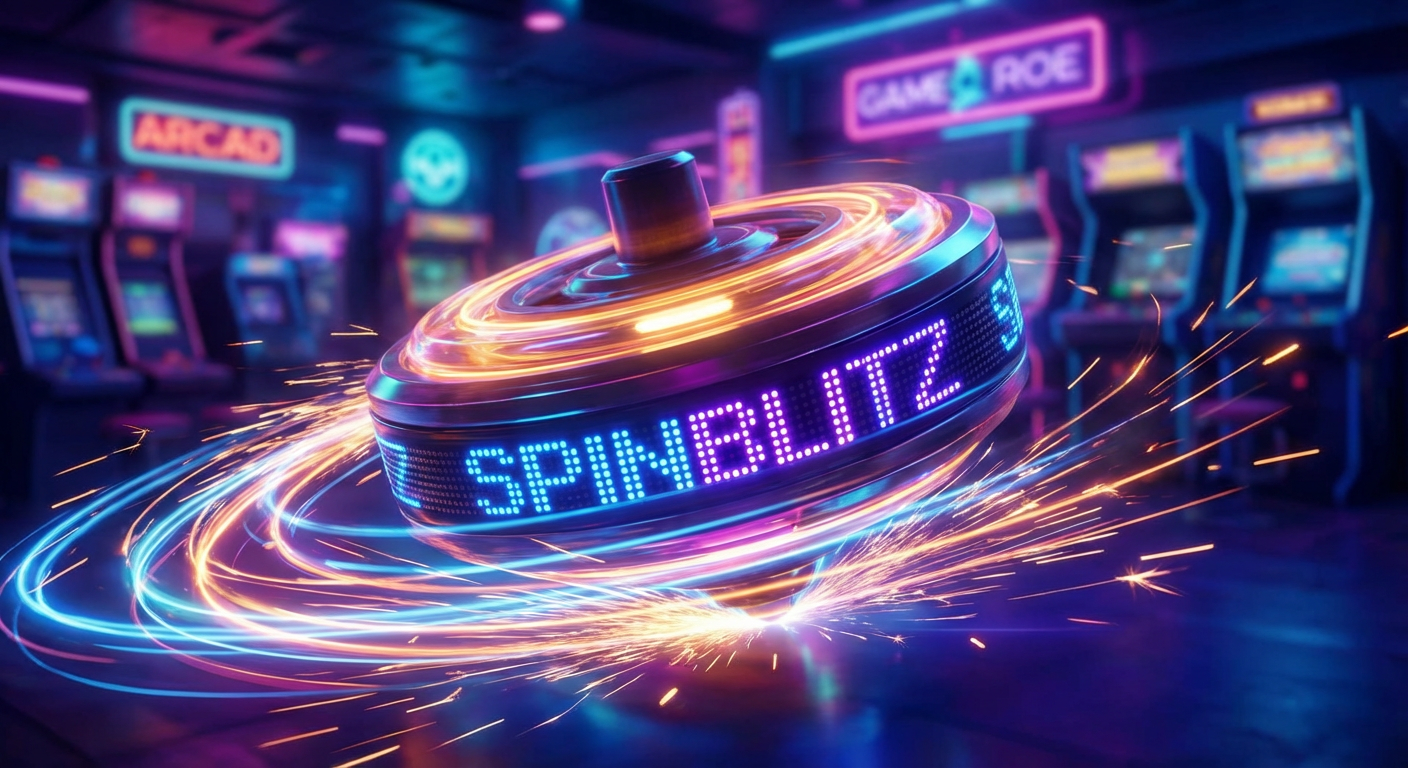
The digital entertainment landscape is undergoing a seismic shift, driven by a demand for faster, more engaging, and visually stimulating experiences. At the forefront of this movement is a concept known as SpinBlitz. Combining the rhythmic mechanics of traditional rotational games with the high-octane pace of modern “blitz” gaming, SpinBlitz represents a new frontier for enthusiasts seeking both adrenaline and precision.
The Anatomy of the Spin: Mechanics and Motion
At its core, SpinBlitz is defined by its kinetic energy. Unlike traditional games that rely on static progression, SpinBlitz utilizes a continuous motion engine. Players interact with a central rotating interface where timing is the primary currency. The “Spin” refers to the core movement—a recursive, circular path that requires the user to synchronize their inputs with increasing centrifugal force.
The “Blitz” element introduces the variable of time. In a standard environment, players might have seconds to react; in a SpinBlitz scenario, those windows shrink to milliseconds. This creates a flow state, a psychological phenomenon where the user becomes fully immersed in the task at hand, losing track of external distractions.
![Image: A vibrant digital interface showing neon-lit circular tracks with high-speed motion blur effects.]
The Technology Powering the Blitz
Developing a SpinBlitz environment requires more than just flashy graphics. It demands a robust backend capable of handling high-frequency inputs.
- Haptic Feedback Integration: Modern devices use sophisticated vibration motors to simulate the “weight” of the spin. As the rotation speeds up, the haptic intensity increases, providing a tactile sense of momentum.
- Low-Latency Engines: To maintain the integrity of a “blitz,” there can be no lag between a user’s action and the on-screen reaction. Developers utilize custom-built engines that prioritize frame-rate stability over redundant textures.
- Adaptive Difficulty AI: The most compelling SpinBlitz experiences use algorithms to monitor player performance. If a player masters a certain RPM (revolutions per minute), the AI introduces “counter-spins” or obstacles to maintain the challenge.
Why SpinBlitz is Dominating the Market
The rise of SpinBlitz can be attributed to the “snackable content” trend. Modern consumers often have limited windows of free time. A traditional RPG might require hours of dedication, but a SpinBlitz session can be completed in under three minutes while providing a comparable level of dopamine release.
Furthermore, the aesthetic appeal of these platforms is undeniable. They often borrow from “Synthwave” or “Cyberpunk” visuals—using deep purples, electric blues, and sharp neon contrasts. This visual language signals to the brain that the experience is futuristic and high-energy.
![Image: A conceptual diagram showing the intersection of centrifugal force and user reaction time in a gaming context.]
Strategies for Mastering the Momentum
For those looking to excel in the SpinBlitz arena, success is not merely a matter of luck. It is a disciplined study of physics and reflex.
- The Center-Gravity Rule: Most SpinBlitz interfaces reward players who can keep their focus on the center of the rotation rather than chasing the edges. By focusing on the axis, your peripheral vision can better track incoming obstacles.
- Predictive Clicking: You cannot react to a blitz; you must anticipate it. Expert players develop a rhythmic cadence, clicking or swiping in anticipation of where the “spin” will be, rather than where it currently is.
- Managing the Fatigue Curve: High-velocity gaming is taxing on the nervous system. The most successful users play in short bursts, allowing their “twitch muscles” to recover between sessions.
The Social and Competitive Edge
SpinBlitz has transcended solo play to become a competitive staple. Global leaderboards track “Blitz Scores,” which are a combination of speed, accuracy, and duration. We are seeing the emergence of SpinBlitz tournaments where the world’s fastest reflectors compete for massive prizes. The communal aspect—sharing “perfect spins” on social media—has created a self-sustaining ecosystem of content creators and fans.
![Image: A group of professional gamers at high-end workstations competing in a high-speed digital tournament.]
The Future of the Spin
As we look toward the horizon, the integration of Virtual Reality (VR) and Augmented Reality (AR) will likely take SpinBlitz to the next level. Imagine a 360-degree SpinBlitz environment where the user isn’t just looking at a screen but is standing in the center of the rotation itself. The physical demands would increase, turning digital entertainment into a form of “Exer-gaming.”
Additionally, the incorporation of blockchain technology is allowing for the ownership of unique “Spin Skins” or custom rotation patterns, giving players a sense of digital permanence in an otherwise ephemeral, high-speed world.
Conclusion
SpinBlitz is more than just a buzzword; it is a reflection of our fast-paced, digitally-integrated culture. It challenges our reflexes, satisfies our need for instant gratification, and pushes the boundaries of what mobile and desktop hardware can achieve. Whether you are a casual player looking for a quick thrill or a competitive gamer aiming for the top of the leaderboard, the world of SpinBlitz offers an endless cycle of excitement.
In the dance between the spin and the blitz, only the most focused will survive the blur. Are you ready to find your center?
